Integrated Marble Slab Detailing in Modern Kitchens
Mitered waterfall edges, seamless slab splashbacks, and premium brass hardware integration.
CoastHomeHub Editorial · 7 min read · Updated 22/06/2026
The Waterfall Island & Slab Splashback Integration
In high-end kitchen design, the island benchtop is treated as a solid piece of stone sculpture. A mitered waterfall edge — where the marble vein flows continuously from the horizontal benchtop down the vertical side panel — requires precision CNC cutting by a stonemason.
Extending this stone slab vertically onto the wall as a seamless splashback removes grout lines entirely. This creates a clean, architectural look that elevates the entire kitchen. To keep the focus on the marble, recess powerpoints or use brushed metal faceplates that harmonize with the stone veining.
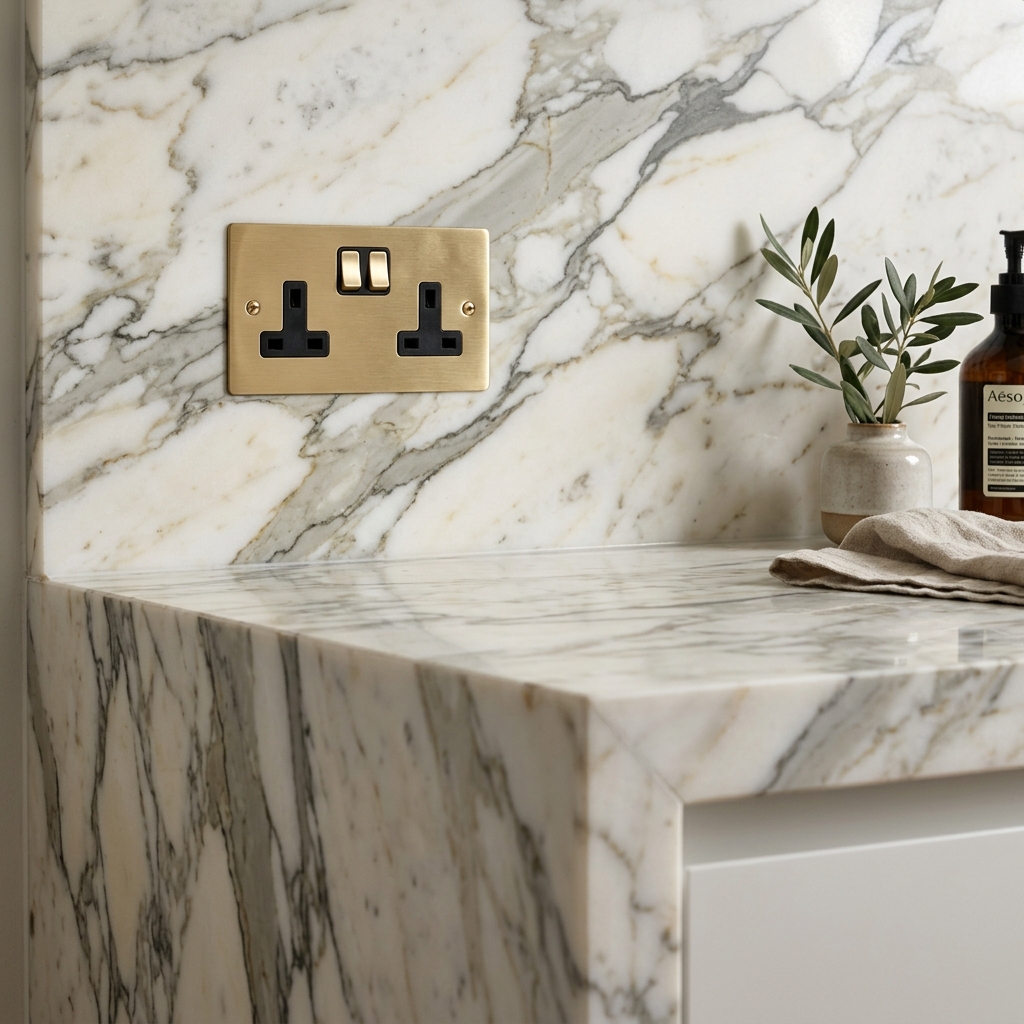
Figure 6.1: High-end kitchen slab splashback featuring integrated brushed brass dual electrical outlets flush-mounted to Calacatta marble.
Stone Selection: Natural Marble vs. Engineered Alternatives
Calacatta and Carrara marble are the gold standards of luxury, but natural marble is porous and prone to staining from lemon juice, wine, or vinegar. It requires annual sealing and careful daily maintenance.
For high-use family kitchens, engineered quartz or sintered porcelain slabs offer identical visual vein patterns but are entirely non-porous and scratch-resistant. These alternatives do not require sealing and can withstand direct heat from hot pots.
Frequently Asked Questions
How thick should a kitchen stone benchtop be?
Standard slabs are 20mm thick. For a chunkier look (e.g. 40mm or 80mm), the stonemason builds a mitered apron edge around the perimeter.
Are natural marble splashbacks hard to maintain?
If sealed correctly with a high-grade sealer, they resist splashing. Clean splatters immediately and avoid harsh acidic spray cleaners.