The Resort Landscape: Travertine & Pool Detailing
Mitered drop-face coping, saltwater-resistant sealers, and compliance with QLD AS 2610 pool safety standards.
CoastHomeHub Landscaping · 8 min read · Updated 22/06/2026
The Design Chemistry: Ivory Travertine Meets Turquoise Water
Ivory travertine is the absolute gold standard for coastal pool landscaping. Its natural cream tones reflect heat, keeping the stone surface comfortable to walk on even under South East Queensland's scorching summer sun. When framed by crystal-clear turquoise pool water, it creates a striking aesthetic contrast that mimics luxury resorts.
To keep the layout clean, design with large-format travertine tiles (such as 600x600mm or 800x400mm). Lay them in a running-bond or modular pattern to emphasize the size of the deck, and use matching sand-colored grout to make the joints vanish.
“A pool deck is only as good as the masonry details. Rushing the travertine installation without structural expansion joints is the number one cause of cracked tiles on Gold Coast coastal properties.”
— Noosa Coastal Carpentry & Landscapes
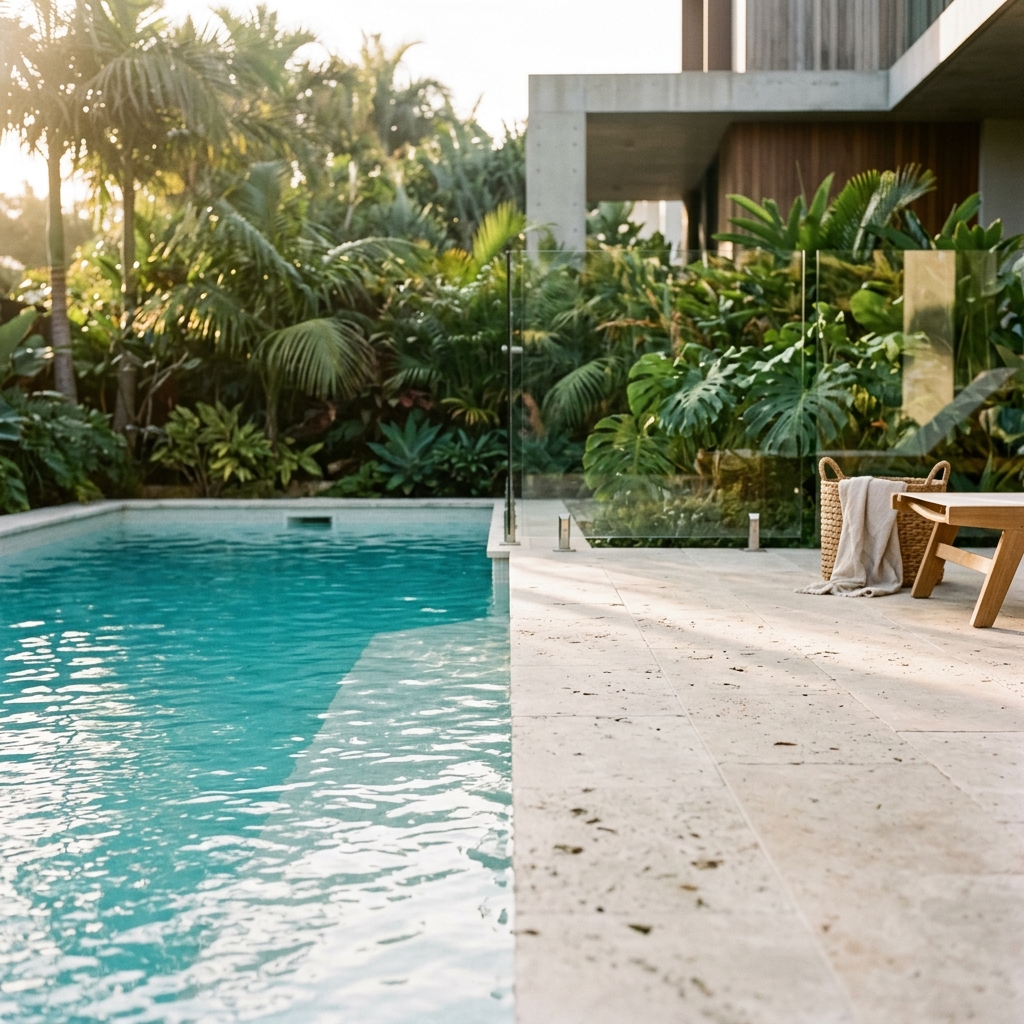
Figure 7.1: A stunning travertine pool coping with drop-face mitered edge, frameless glass pool fence, and subtropical foliage.
The Safety Standard: AS 2610 and Slip Ratings
Under Australian Standard AS 2610, pool surrounds must meet strict safety guidelines. For outdoor pedestrian wet areas, a minimum P4 slip resistance rating is mandatory, although P5 is highly recommended for pool steps and high-splash zones. Ensure your stone supplier provides certified slip-test reports before you purchase.
Additionally, the pool fence must comply with local QLD safety legislation. Ensure any climbable trees, barbecues, or deck chairs are placed outside the 900mm non-climbable zone surrounding the fence.
Technical Sealing & Saltwater Protection
Travertine is a highly porous sedimentary rock. If you have a saltwater pool, salt crystals will penetrate the stone. As the water evaporates, the salt crystallizes and expands, causing the stone to flake and erode (salt attack).
To prevent this, apply two coats of a premium consolidating sealer (like Dry-Treat or Stain-Proof) specifically designed for porous stone around saltwater pools. This sealer must be reapplied every 3 to 5 years depending on traffic and exposure.
Frequently Asked Questions
Does travertine get hot in the sun?
Light-colored travertine (like Ivory or Classic) stays significantly cooler underfoot than darker stones (like Granite or Slate) or composite decking, making it ideal for bare feet.
How do I clean travertine pool surrounds?
Pressure wash the stone once or twice a year with a mild pH-neutral stone cleaner. Avoid acidic cleaners as they will permanently etch the calcium carbonate structure of the travertine.